
Every time dark monsoon clouds gather over concrete skylines, a familiar anxiety sets in. It begins with a sudden downpour, followed quickly by waterlogged intersections, paralyzed traffic, and muddy water encroaching into living rooms and storefronts.
We often blame outdated municipal drainage or unexpected cloudbursts. But the true culprit behind modern urban flooding is far more persistent and man-made: plastic.
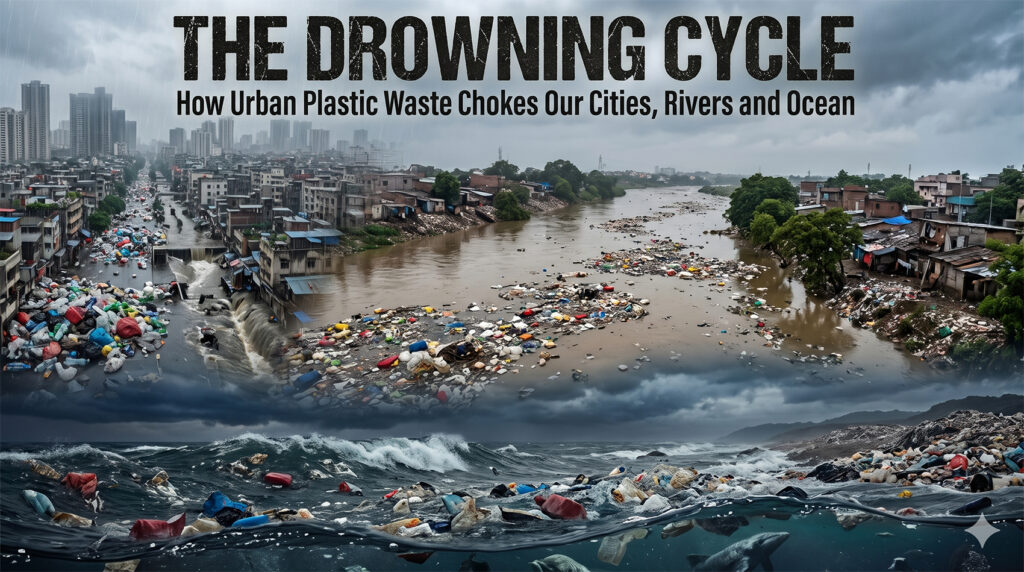
The plastic bottle tossed out of a car window or the thin polybag abandoned in a roadside gutter does not simply vanish. It embarks on a destructive journey that connects choked stormwater drains to polluted rivers, fragile marine ecosystems, and ultimately our own dining tables.
Phase 1: The Urban Paralysis — When Drains Turn into Dams
In any city, stormwater drainage networks and underground culverts are engineered to swiftly channel rainwater away from paved roads into natural drainage basins and rivers.
Plastic defies this system entirely:
-
The Sieve Effect: Lightweight single-use wrappers, bottles, and thermocol packaging wash into storm inlets during the first ten minutes of rain. They create impermeable dams against iron grills and narrow underground pipes.
-
Artificial Urban Deluges: When storm drains choke, rainwater has nowhere to go but upward. Water levels rise rapidly across low-lying roads, flooding basements, cutting off emergency transit, and causing severe infrastructure damage.
-
Stagnation and Disease Outbreaks: Long after the rain stops, plastic debris traps stagnant pools of filthy runoff. These pockets become immediate breeding grounds for mosquitoes and waterborne pathogens, triggering post-monsoon spikes in dengue, malaria, and gastrointestinal infections.
Phase 2: The River Highway — Moving Toxins Downstream
What manages to escape the city’s flooded streets does not find a clean exit. Extreme downpours transform peaceful suburban streams and major rivers into turbulent transport highways for industrial and household garbage.
-
Silt and Plastic Conglomeration: As plastics sink into riverbeds, they entangle with river silt, suffocating freshwater flora, depleting dissolved oxygen levels, and killing off native fish populations.
-
Leaching Chemical Cocktails: Prolonged friction against river rocks combined with sun exposure degrades macro-plastics into jagged fragments, leaching bisphenols (BPA), phthalates, and synthetic chemical additives directly into primary municipal drinking water reservoirs.
-
Disrupting Floodplains: Natural wetlands and riverbanks that historically absorbed excess floodwaters are smothered under layers of discarded synthetic waste, permanently diminishing the land’s ability to recharge local groundwater aquifers.
Phase 3: The Ocean Sink and the Microplastic Boomerang
Rivers serve as the ultimate arterial pipeline to the open sea. Once synthetic waste enters marine environments, the crisis transforms from a localized physical blockage into a global biological emergency.
In the ocean, relentless ultraviolet radiation and wave action break plastic down into microplastics—particles smaller than 5 millimeters.
-
Marine Poisoning: Plankton, shellfish, and commercial fish mistake colorful microplastic granules for food. The indigestible material leads to physical starvation, endocrine disruption, and internal lacerations across marine species.
-
The Bioaccumulation Boomerang: As smaller organisms are consumed by larger predators, synthetic toxins concentrate up the food web. The plastic discarded on a city street returns to humanity’s dinner plates inside seafood, table salt, tap water, and commercial beverages.
-
Internal Human Accumulation: Recent medical studies have documented microplastic and nanoplastic fibers embedded in human bloodstreams, lungs, and placenta tissues, linked to inflammation, cellular stress, and metabolic disruptions.
Breaking the Cycle: The Urgency of Source-Level Accountability
Building higher retaining walls and cleaning gutters right before the monsoon is treating the symptom while ignoring the disease. Stopping this systemic cycle requires tackling plastic at its exact point of generation:
-
Source Segregation at the Doorstep: Ensuring single-use plastics and packaging never encounter the open environment in the first place.
-
Individual Traceability & Incentives: Shifting from anonymous dumping to transparent, tracked collection models where schools, residential societies, and events actively audit their diverted waste.
-
Formalized Recycling Channels: Diverting post-consumer polymers away from local landfills directly into authorized mechanical and chemical recycling pipelines.
A single discarded wrapper on a dry street may feel harmless in the summer. But when the monsoon hits, that same piece of plastic helps flood our neighborhoods, poison our waters, and return to our bodies. The solution starts long before the clouds burst—at the bin, in our neighborhoods, and across our communities.