Walk along any riverbank or beach today, and you will see the heavy footprint of modern waste. Every plastic bottle, wrapper, or polybag dropped on a city street embarks on an unstoppable journey into our rivers and deep into the ocean.
To solve this crisis, we first need to look at the staggering scale of the problem.
Key Figures at a Glance
75 Million to 199 Million Tonnes: The estimated amount of plastic waste currently accumulated in the world’s oceans.
8 to 10 Million Metric Tons: The amount of new plastic that floods our aquatic ecosystems every single year – equal to dumping a full garbage truck of plastic into the sea every single minute.
Centuries of Persistence: Unlike natural materials, plastics do not dissolve; they simply break down into smaller pieces that remain in the environment for hundreds of years.
How the Crisis is Accelerating
The volume of ocean plastic is growing rapidly due to three main factors:
- Massive Production: A huge percentage of global plastic is designed for single-use packaging—used for seconds and discarded forever.
- Monsoon & Storm Runoff: Heavy seasonal rains act as a massive conveyor belt, washing trash from choked city gutters and unmanaged dumps straight into rivers.
- Weak Waste Infrastructure: Fast-growing urban areas without proper waste sorting experience high leakage rates, sending unsegregated garbage directly into natural waterways.
The Devastating Harms to Rivers and Oceans
1. The Damage to Rivers
- Choking Freshwater Life: Plastic sheets block sunlight from aquatic plants and drastically reduce oxygen levels needed by fish.
- Worsening Urban Floods: Trash packed into riverbeds and stormwater drains creates physical dams, turning city streets into dangerous, waterlogged zones during heavy rains.
- Leaching Toxins: Sun exposure and friction cause plastics to break down, releasing dangerous chemicals (like BPA and phthalates) directly into river water used for drinking and farming.
2. The Marine Disaster
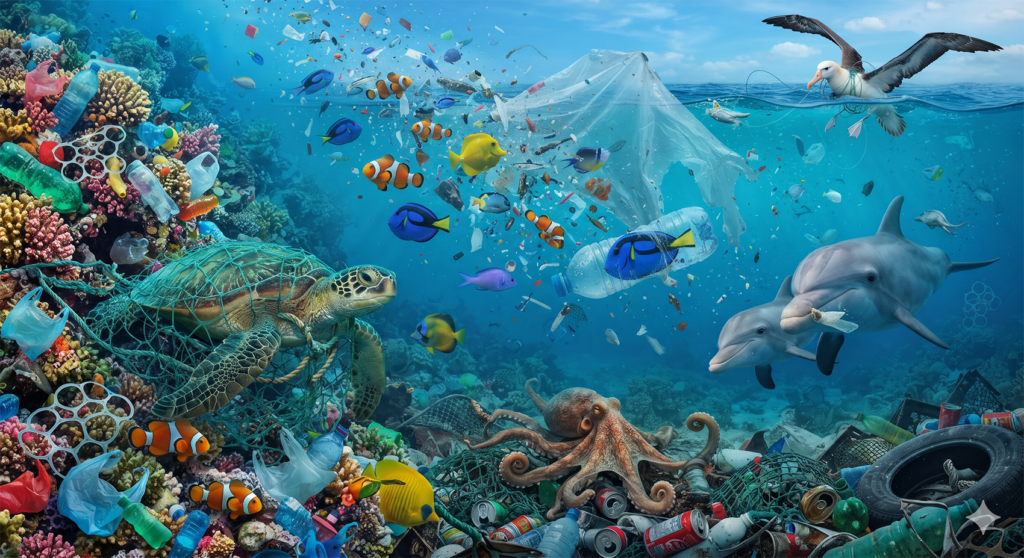
- Starvation & Entanglement: Sea turtles, seabirds, and marine mammals mistake floating plastic for food or become trapped, leading to starvation and death.
- The Microplastic Boomerang: Waves break ocean plastics down into microplastics (particles smaller than 5mm). These particles absorb toxic pollutants and enter the marine food web.
- Returning to Our Plates: As marine life consumes microplastics, these toxins move up the food chain—eventually ending up in the seafood, salt, and water we consume, and even in human bloodstreams.
Stopping the Flow at the Source
The ocean plastic crisis is overwhelming, but the solution starts upstream—long before trash ever reaches a river or coast.
By enforcing strict source-level segregation, empowering schools and communities to track their dry waste, and using digital QR-based systems to ensure every piece of plastic goes to certified recyclers, we can cut off the supply of trash at its root.
Protecting our oceans doesn’t just happen on the beach; it starts at every doorstep, classroom, and community bin.